

FINANCE PRODUCTS
Vehicle & Asset Finance
Funding for the vehicles, plant and equipment your business runs on.
What it is
A way of paying for an asset over time rather than all at once. You get the van, the machine or the equipment now, and the cost is spread across an agreed term. The asset itself usually acts as the security, which is why lenders will often look at asset finance when they would say no to an unsecured loan.
It applies whether you're buying one van or replacing a whole fleet, and whether the asset is new, used or built to order. Most businesses come to it because the alternative is paying cash for something that will earn its money back slowly.
What people use it for
Replacing a fleet before the maintenance bills start biting. Buying the machine that lets you take on a contract you've already won. Adding a second tipper when the work is there but the cash is tied up in a job that hasn't been paid yet. Sometimes it's planned two years out. More often it's a decision that needs making this month.
A groundworks contractor who has won a job that needs a telehandler on site in three weeks. A haulier whose tractor unit has failed its MOT and can't wait for the next quarter. A school that needs a minibus before term starts. An engineering firm replacing the CNC machine that has become the bottleneck in the workshop.
The common thread is timing. The work is there, the asset isn't, and paying for it outright would take the cash out of the business at exactly the wrong moment.
What can be funded
Specific assets rather than broad categories. If it's used to run the business and it holds its value, it can usually be funded.
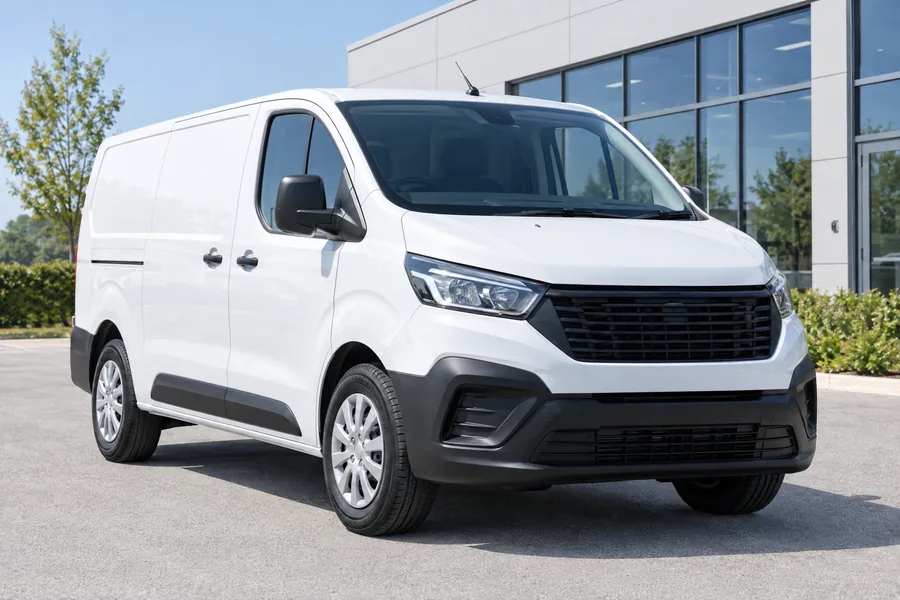
- Vans, pickups and car-derived vans, from a single vehicle to a replacement fleet
- Tractor units, rigids, tippers, curtainsiders and trailers
- Excavators, telehandlers, dumpers, rollers and site equipment
- CNC machines, presses, production lines and packaging equipment
- Commercial solar, battery storage and EV charging infrastructure
- Minibuses, welfare units and specialist vehicles
- Detection, robotics and access equipment
Used and older assets are often fine. So is equipment being imported or built to order, though the timing works differently and it's worth flagging early.
How it works
There are two main routes, and the difference between them is ownership.
Hire purchase spreads the cost across an agreed term, usually with a deposit at the start. You're buying the asset, so it sits on your balance sheet from day one, and once the final payment clears it's yours. This is the usual route for anything you intend to keep and work into the ground.
A lease is a payment for use. You pay to have the asset for an agreed period, and at the end you hand it back, extend, or in some cases move to a replacement. You don't own it. That suits assets you expect to replace on a cycle rather than run to the end of their life.
Terms are generally set against the working life of the asset. A van on a five-year replacement cycle is funded differently from a machine that will still be earning in fifteen years.
In practice: you tell us what the asset is, what it's for and when you need it. We take that to the funders on our panel who are active in that asset type. We come back with the options that fit and explain what each one commits you to.
Ready to talk it through?
Tell us what you're trying to do and we'll come straight back to you.
Enquire nowTHE HONEST BIT
Three things worth knowing before you commit
At the end of a lease, you don't own it
People are routinely surprised by this, usually at the point they try to sell something they've been paying for over five years. If ownership matters, say so at the start, because it changes which structure makes sense.
The asset is the security
That's what makes asset finance available where an unsecured loan isn't. It also means the funder has a claim on the asset if the payments stop. That's the trade, and it's worth being clear-eyed about it.
A longer term isn't a cheaper one
Stretching the term brings the monthly cost down and raises what the asset costs you overall. Matching the term to how long the asset will realistically keep earning is usually the better call, even when a longer one looks easier.
Questions we get asked
Can I finance a used vehicle or machine?
Yes, and a good deal of what we arrange is used. Funders look at the age of the asset and how much working life is left in it, which affects the term more than anything else. Older kit isn't a problem in itself, though a machine with a niche resale market needs more explaining.
What's the difference between hire purchase and leasing?
Ownership. With hire purchase you're buying the asset over time and it's yours after the final payment. With a lease you're paying to use it for an agreed period and you hand it back at the end. Which one suits you depends on whether you want to keep the asset or cycle it.
How long does it take?
It varies with the asset and the funder. A straightforward van moves quickly. A large or unusual asset, or a business with a short trading history, takes longer because there's more for the funder to look at. Tell us the deadline early and we'll say honestly whether it's realistic.
Do I need a deposit?
Often, though not always, and the amount varies by asset and by funder. Some structures are built around a deposit and others aren't. It's one of the things we work out once we know the asset and the business.
My business is young, or last year was difficult. Is it worth asking?
It's worth a conversation. Funders differ widely in what they'll consider, and the asset acting as security changes the picture compared with an unsecured loan. We can't tell you what any funder will decide, and nobody honest can. What we can do is say which ones are worth approaching, and why.
Next step
Tell us what the asset is and when you need it, and we'll work out which funders on our panel are worth approaching. You'll speak to a real person and get a straight answer about what's realistic.
RELATED
Refinance, if the capital you need is already tied up in kit you own. Personal guarantee insurance, if a funder asks you to sign one.
Worth reading: what an asset finance broker actually does that a bank can't.